If I had to think about some high points of 2024, one of them would be an amazing exhibition that I had the opportunity to visit last summer: “Bodies in the Middle ages”, at the Landesmuseum of Zurich until 14th of July 2024. As the name says, the exhibition as a whole explored the relationship between Medieval people and their bodies.
To me, as a fashion artisan & history lover, the exhibition had great highlights in the context of menswear, and how the ideals of chivalry reflected the body image and costumes of the time.
The Knighthood:
By the XIII century, changes on the male costume could already be seen in Florence: Going from the roman-inspired tunic, to the more complex garment construction. The idea was to celebrate the youth and manhood shown by knights and noblemen, while the large tunics from the past century remained to the lower classes the elderly.
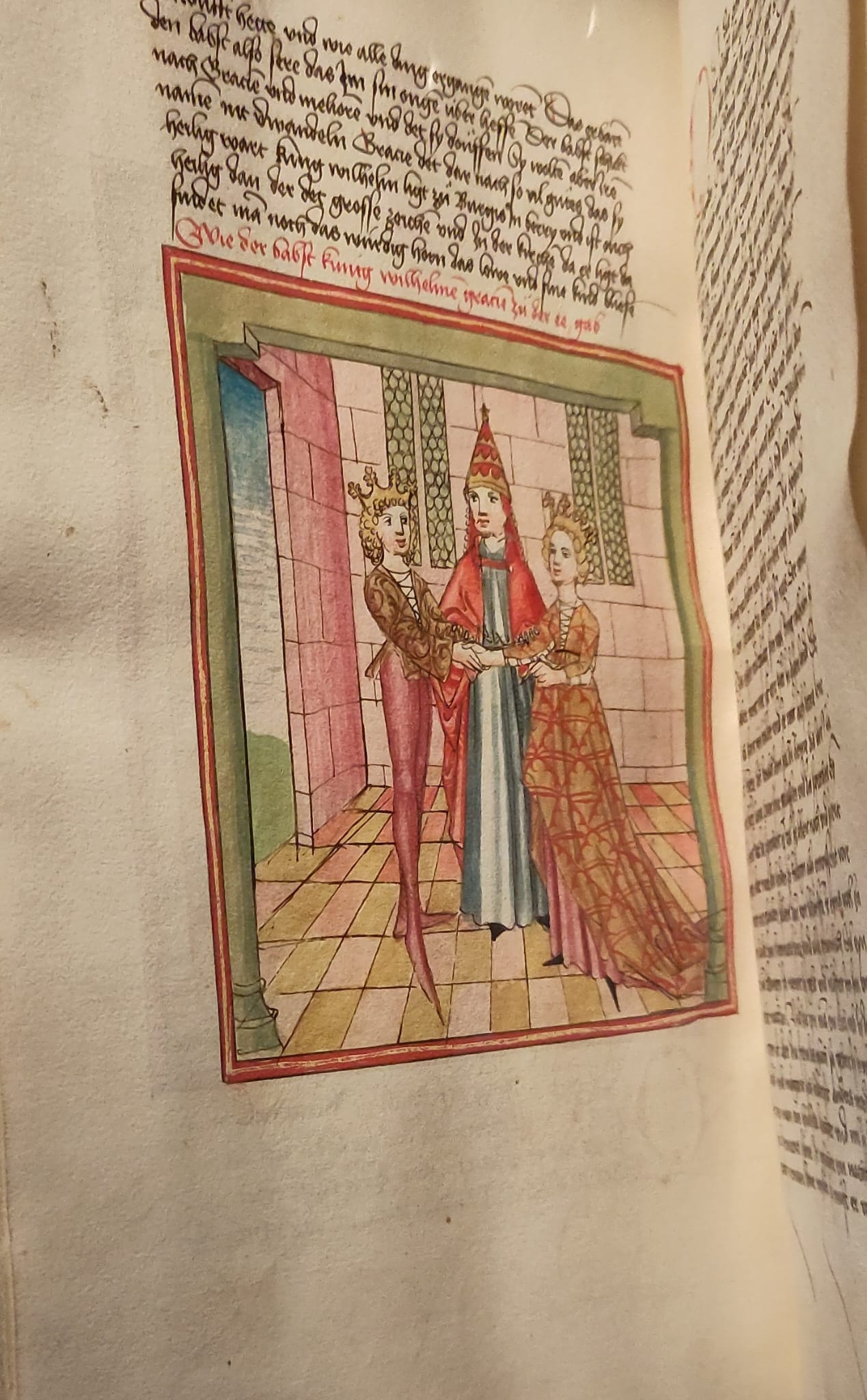
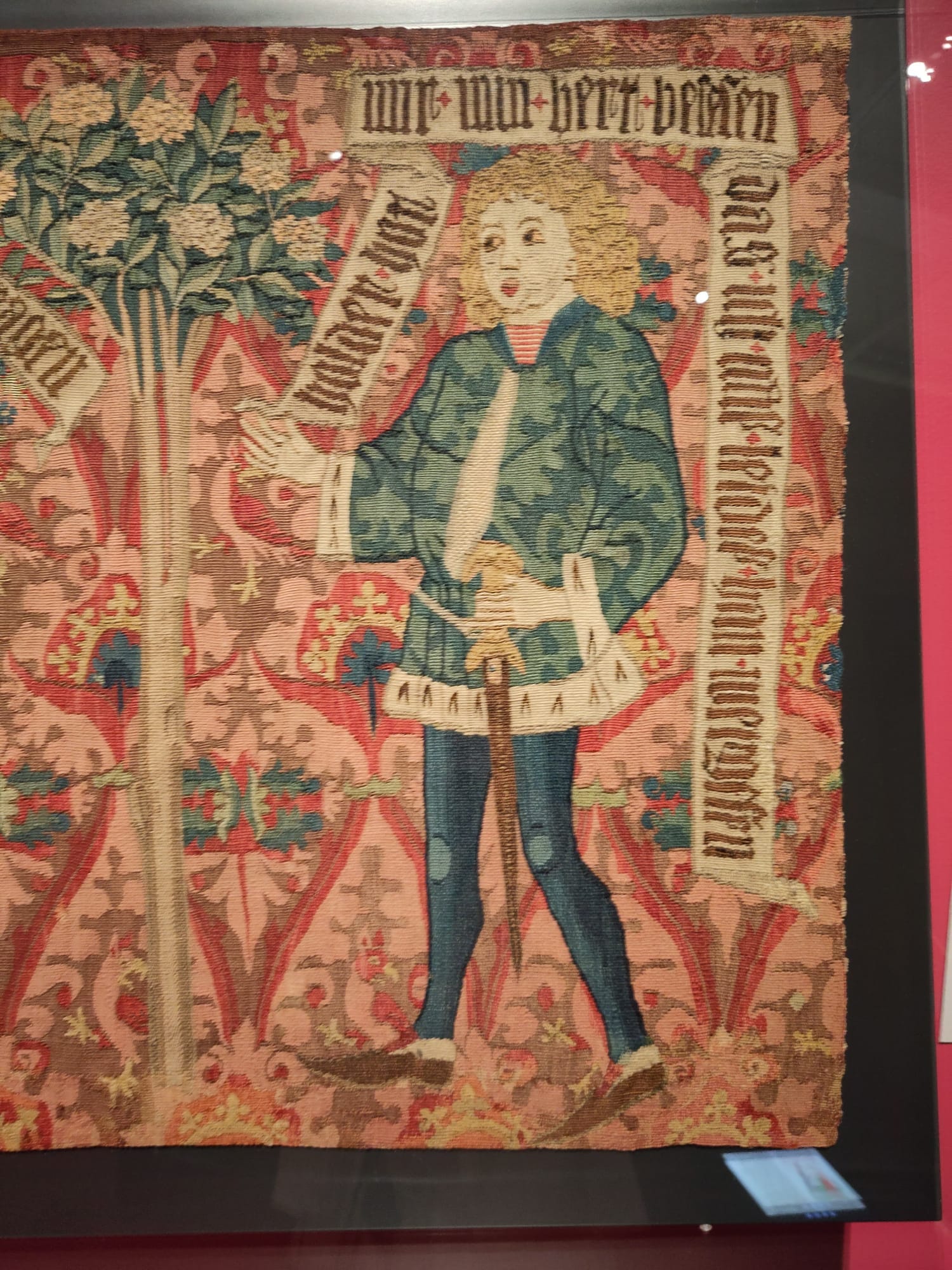
The desired archetype that was widespread throughout European art, was of the opulent and gallant knight wearing fine and colored fabrics, and courting noble ladies at the height of his beauty and virility.
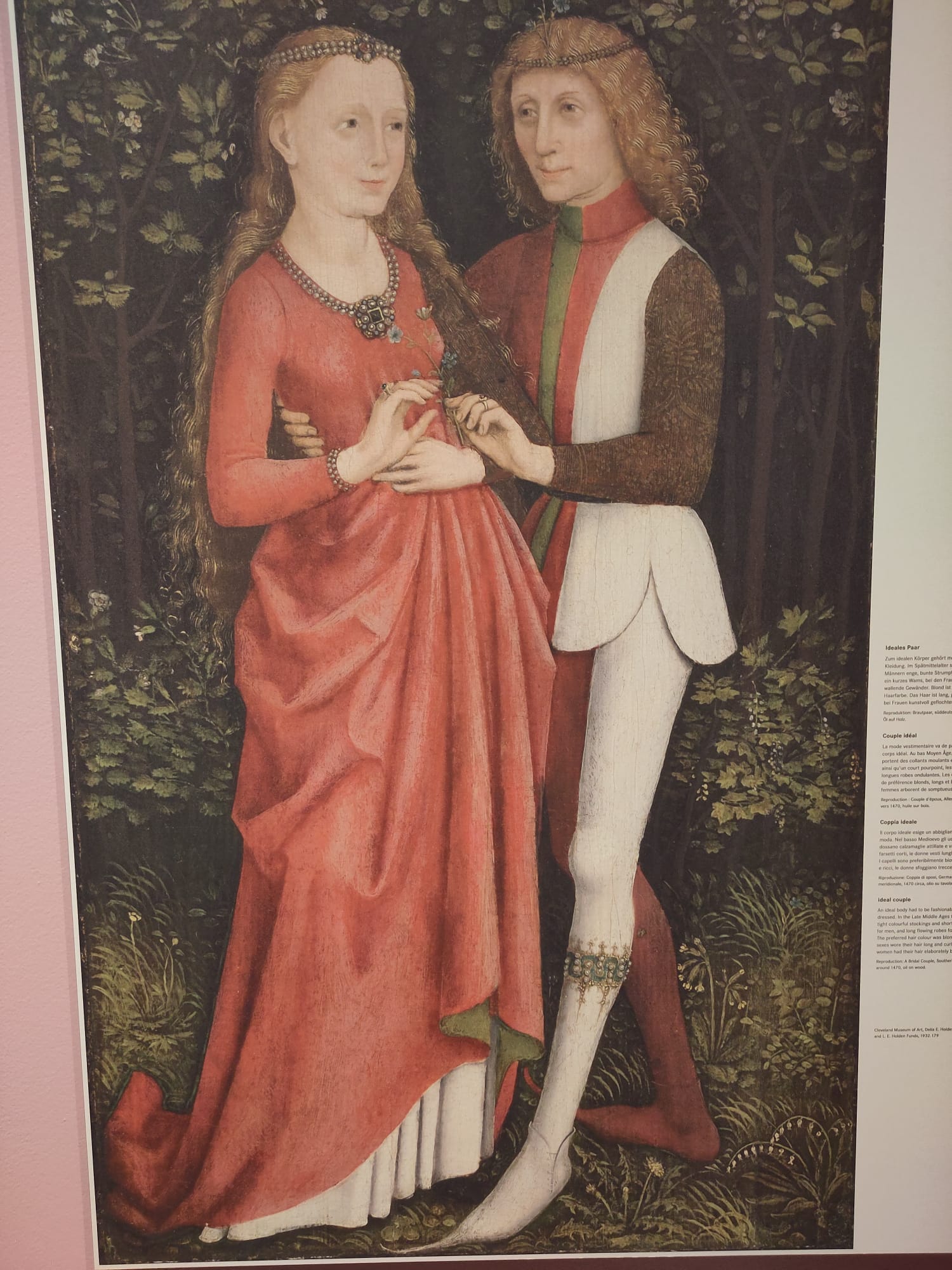
It was a period of great development for garment construction and pattern making as a profession to fulfill the search for elaborated and decorated pieces, that were now designed to create a slander figure. Enhancing the chest and arms, and exposing more of the legs, in the search for a ‘vertical’ aesthetic.
The Medieval male look was now composed of:
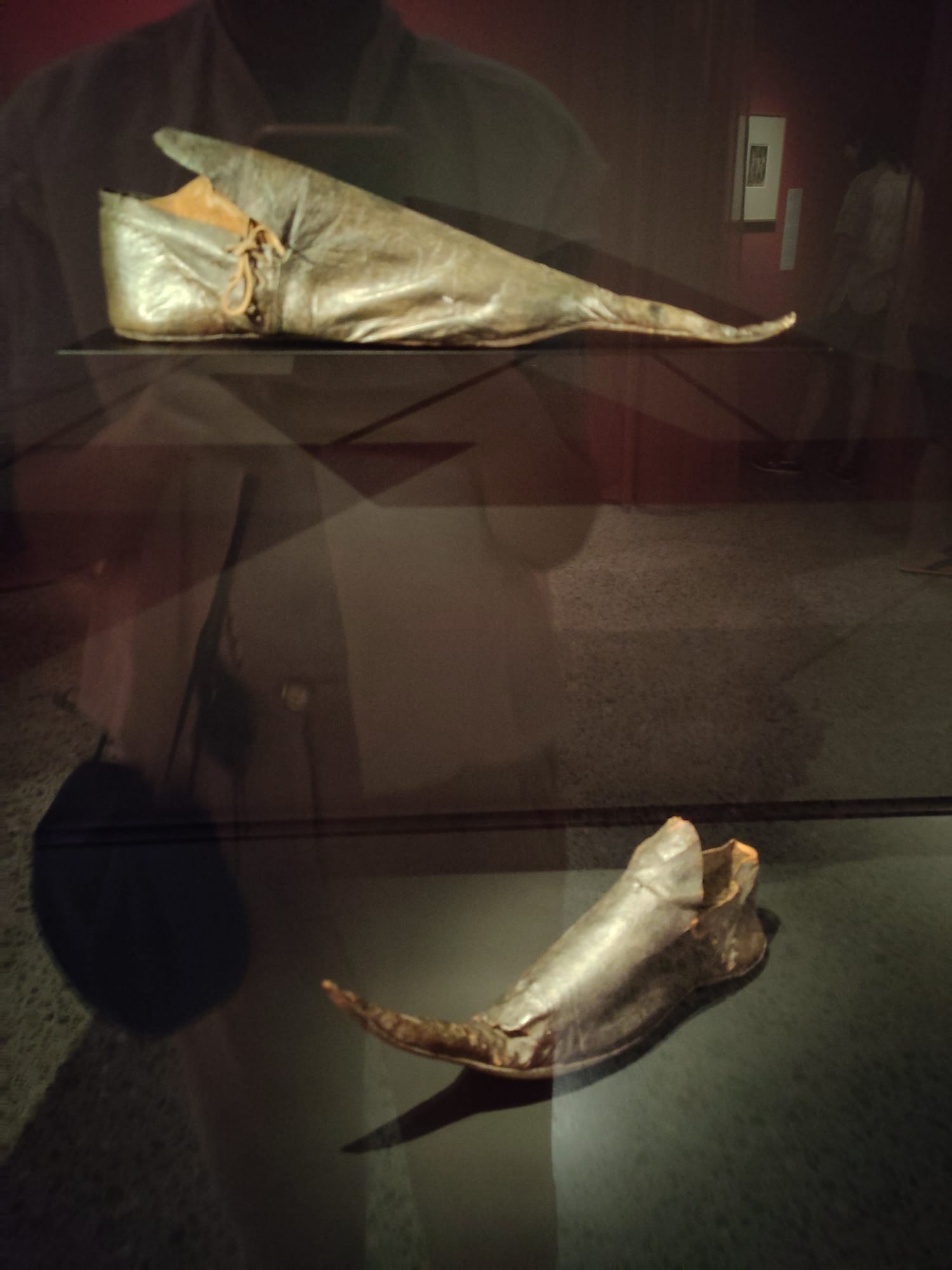
Footwear
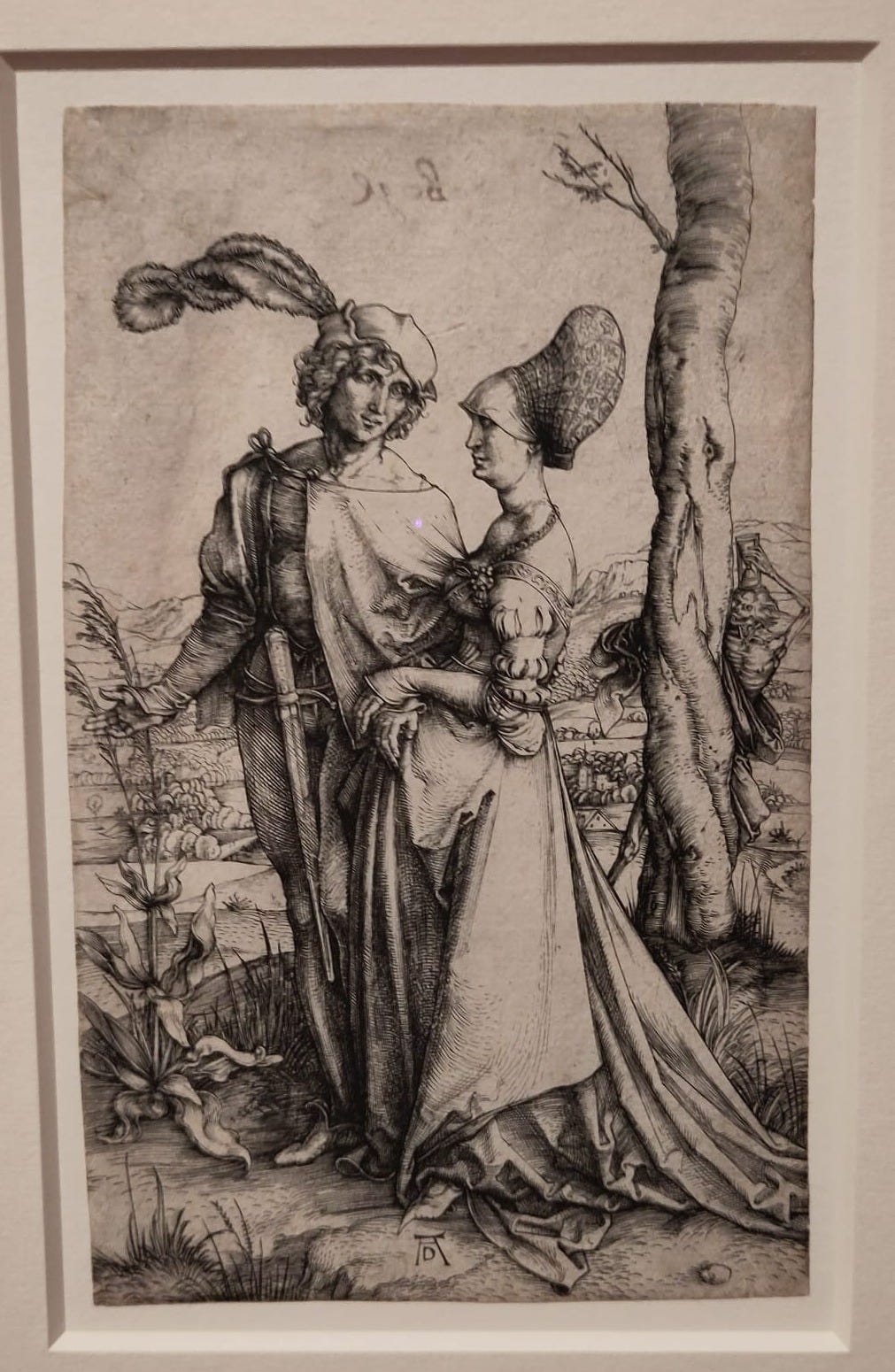
Pointy shoes called ‘poulaines’ that in places like Tuscany were subject to strict laws to safeguard decency and cultural virtue. The length, materials and decorations were controlled by legislators, but the idea was always to create an expanded and flamboyant image. The shoes could be made of leather and sometimes covered with velvet. They could also be decorated with small and symmetrical cut shapes.
Brache
What would later evolve to be the ancestor of modern trousers, it was originally a piece of underwear that could vary in terms of size and length, and with a lace around the waist. Young nobles, always inspired by the aesthetic of Knighthood and the desire to enhance their bodies, preferred to wear shorter ones, at knee length, and that could easily be put under the high socks that covered the whole leg.
The Under shirt
Usually made from natural fibers like cotton and hemp, it wasn’t well represented in art and never shown in public by members of higher classes, who would wear them under the farsetto. It’s indicated that at least in Italy, the under shirts were produced by women as professional seamstress.
Farsetto & Giubba
To wear over the shirt, it’s considered to be part of the under garments so it was never shown in public. It’s supposed to cover the bust, and it was padded as a way to protect from cold. The Giubba is indicated to be a more elegant version of the Farsetto, and is mentioned with an erotic undertone in writings and novellas of the time.
Gonnella
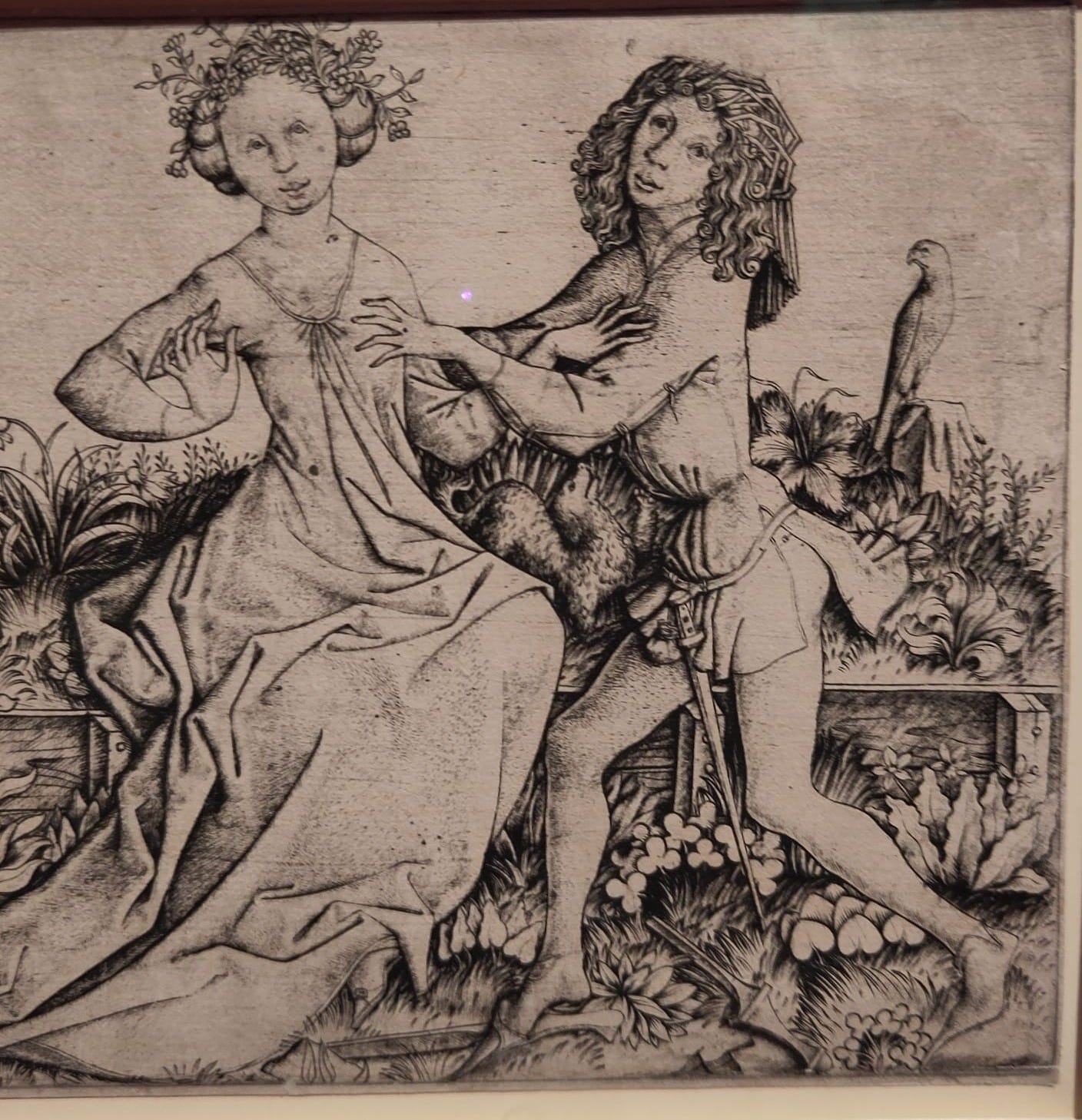
A piece of garment taken directly from the knight’s armors as inspiration. It has a padded upper part to enhance the chest and short sleeves, and the lower part that resembles a small ‘skirt’. The gonnella would then be decorated with a leather belt at the waist to enhance even more the desired shape. Originally, it was designed for actual knights to be able to move and carry their swords, which then became a symbol of masculinity, and used in art as a reference to male erection.
Guarnaca
A sort of over-shirt that covers the gonella mostly used by older men of high status, or by men of lower classes (with less decorated and cheaper materials). It could be worn at knee-length or until the ankles, and it had a buttoned high neck.
Mantles
There is not one single type of an outer-garment. The length, size, materials, style of sleeves and everything else would depend on occupation and social class. But usually, such as with the Guarnaca, the mantles were preferred by older men of high status, instead of the young nobility.
In places like Florence and other Tuscan cities like Pisa and Siena, the shape, materials and decorations allowed were heavily controlled by the government in order to ensure their idea of common decency and virtue. Although with time it became a class indicator, where nobles and people of certain offices were granted privileges on what they could wear, or if a person was wealthy enough to ‘declare’ the garment and pay taxes on it.
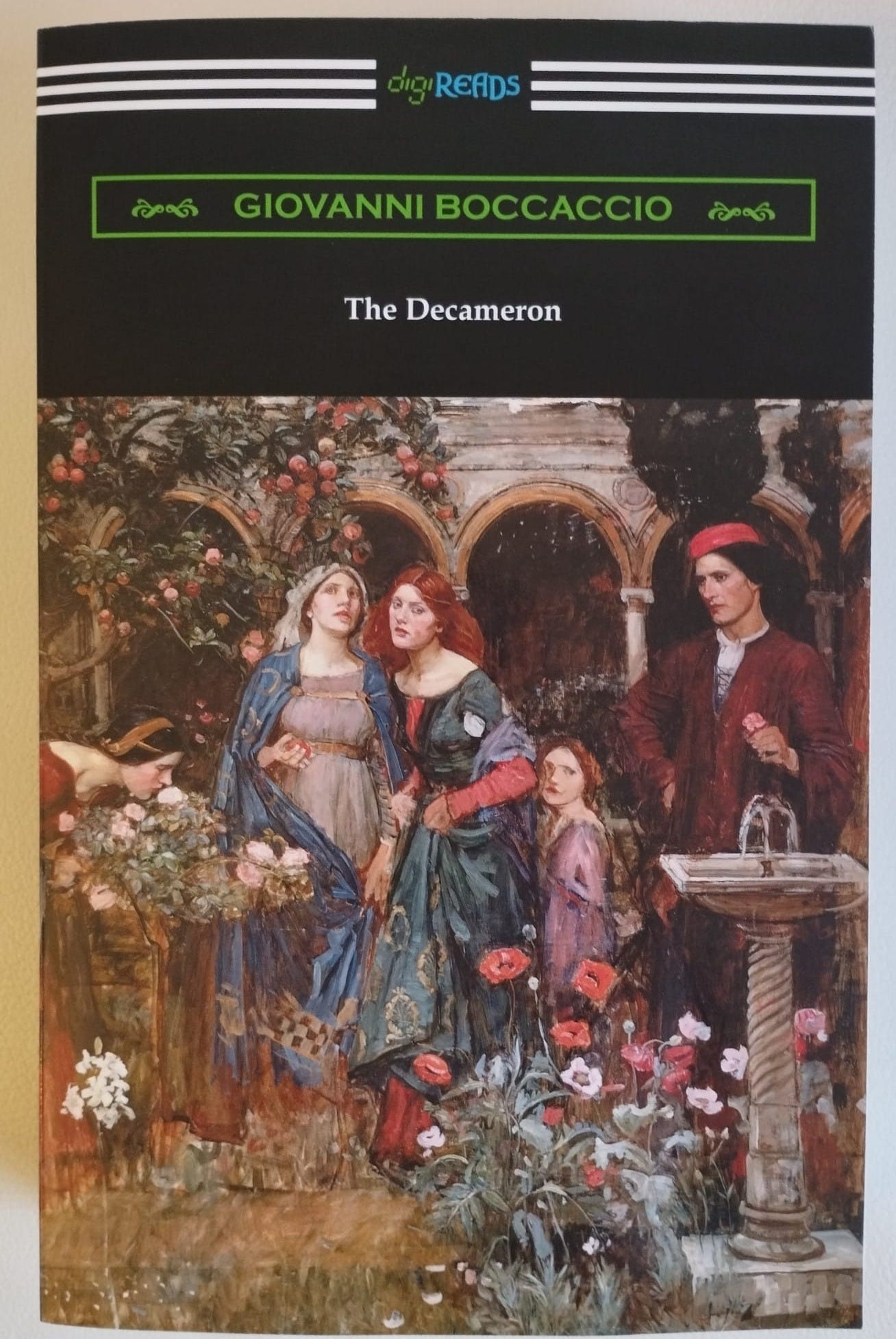
For those who have a passion for literature (so everyone here on Substack), Bocaccio’s Decameron has some passages describing garment pieces and how they were worn. Pairing the reading with the not so recent Netflix adaption, it’s a perfect combination for those enjoying the trend of this medieval renaissance!