“Scent,
seducing.
So sweet is He.
His pink skin calling unto me.
And then I was one with Him,
when the Garden was growing
on my wrists,
and my veins burning
In purest fire.
When I laid back in the bed
of Hyacinths and Dandelions.
My hands were His,
and He touched myself
with blessed and soft fingers.
Possessed in ecstasy so high,
to bring forth
the brightest starlight.”
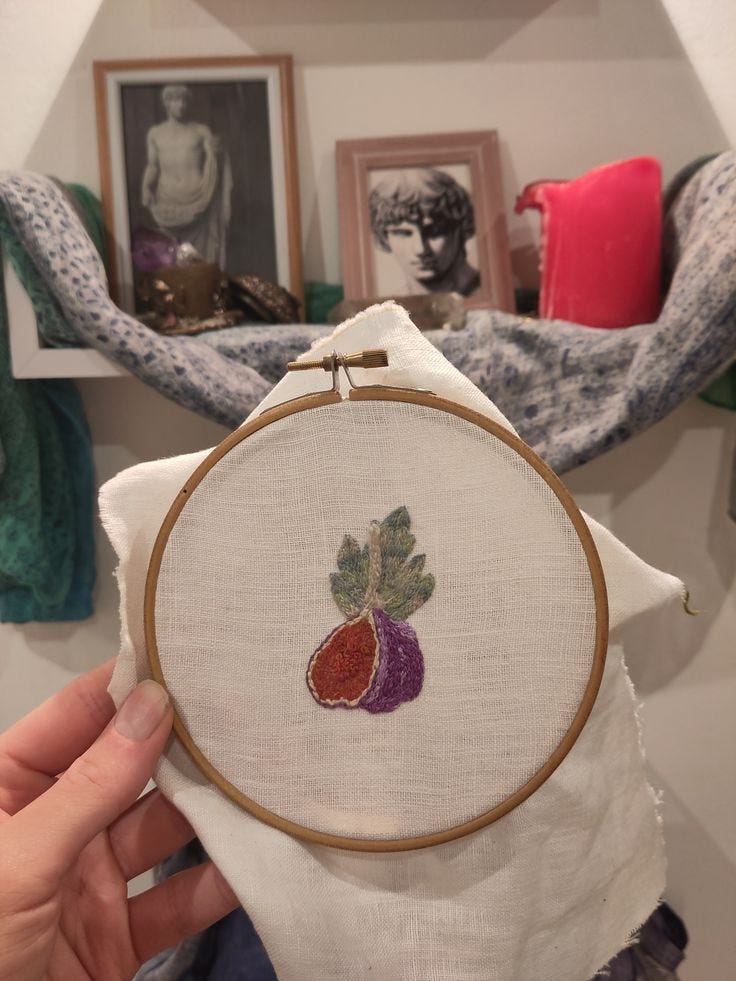
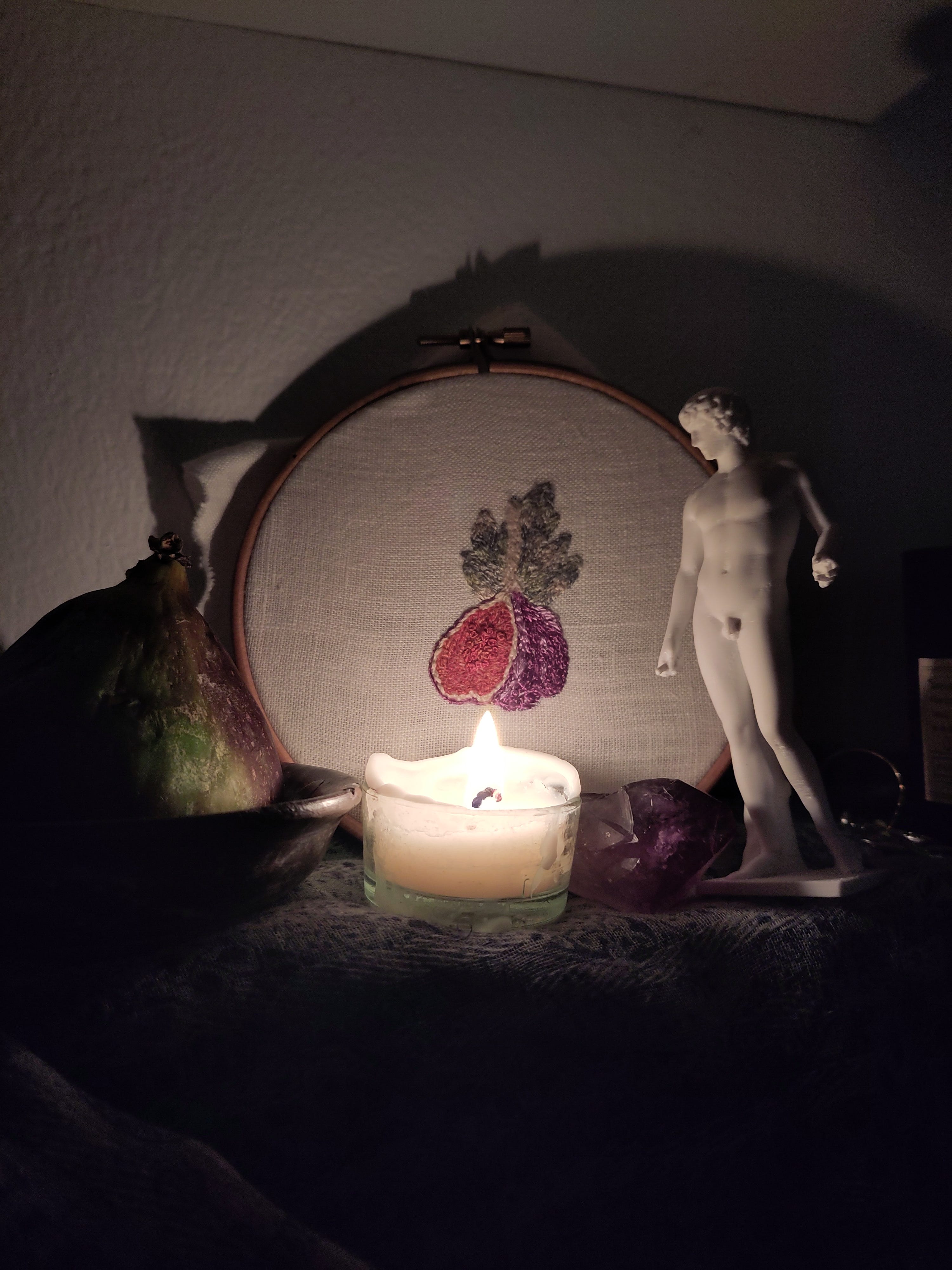
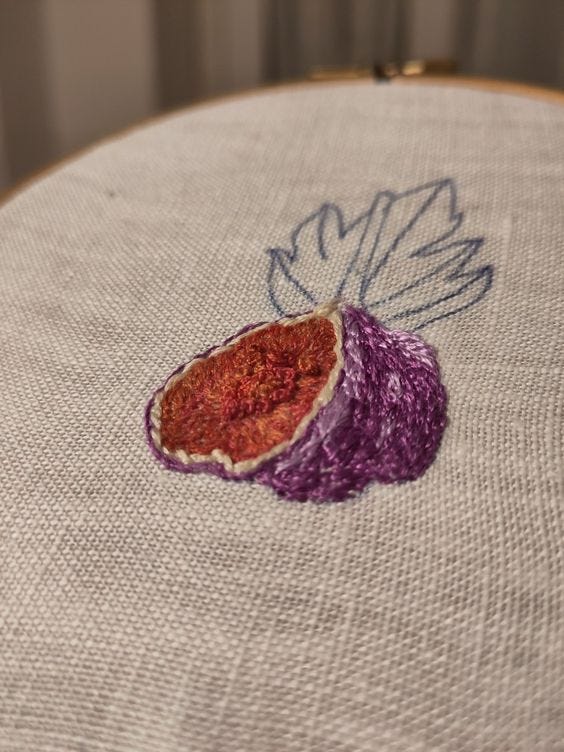
This poem I wrote is not directly inspired by any folklore around the fig, but I think it fits the main mood of the piece of legend that indeed inspired one of my embroidery projects.
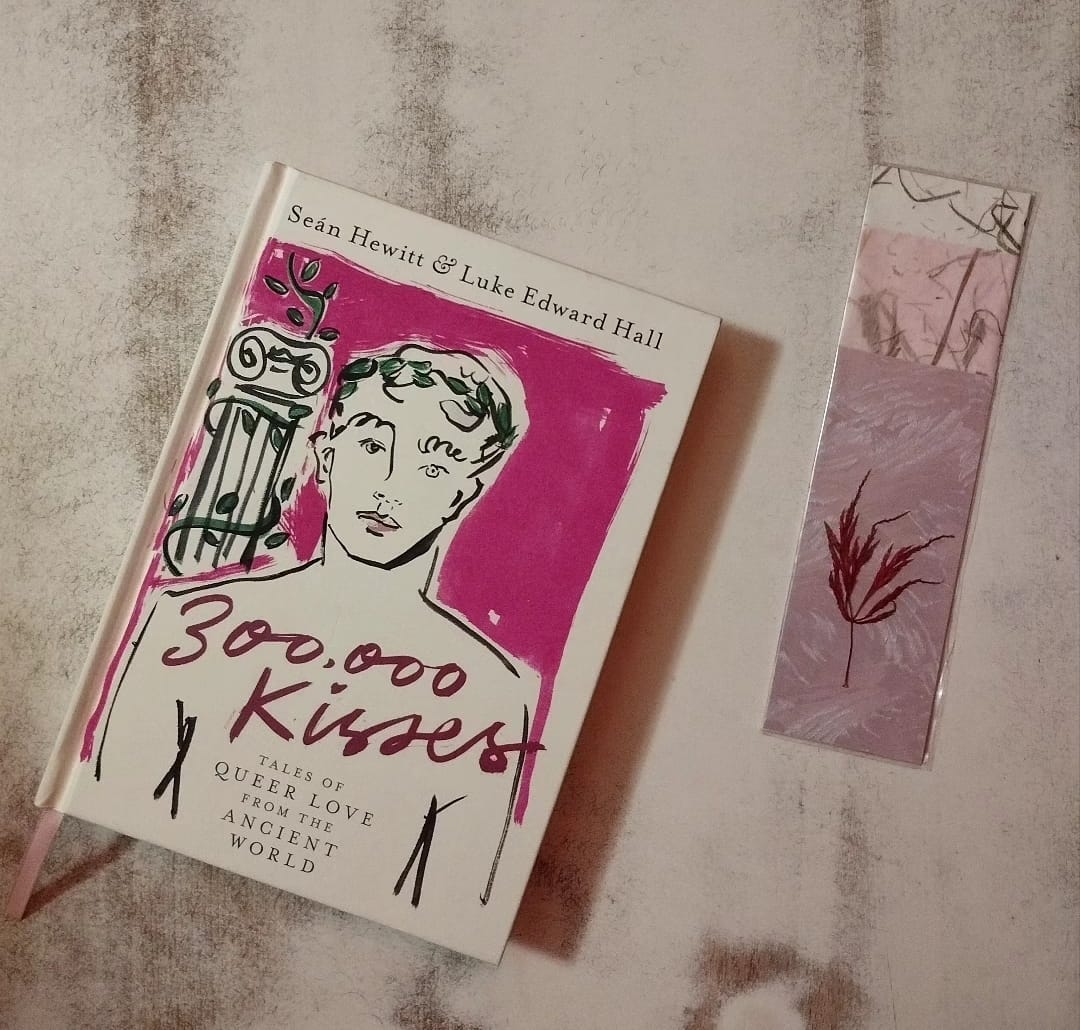
I have in my collection the book “300.00 kisses: Tales of Queer love from the ancient world”, by Seán Hewitt and Luke Edward Hall. An anthology of poetry, legend and philosophic discussions around queer love in classical literature in a contemporary manner, which includes the story of Dionysos and Prosymnus.
In the story, the God was on His way to Hades in search for His mother Selene, and found a mortal shepherd called Prosymnus. Seeing that the God did not know the way to descent, the shepherd offered his assistance to Dionysos, promising to show the way to Hades, in exchange to become one with the God through intercourse. The God made an oath to fulfill the request, and then followed His way to the underworld.
When the God was able to come back, He searched for Prosymnus in order to fulfill the oath, only to discover that the shepherd was long dead. As a way to keep His word, Dionysus took the branch of a fig tree that was growing at the shepherd’s tomb, and created a phallus, that the God used on Himself. Thus, fulfilling the promise made to Prosymnus
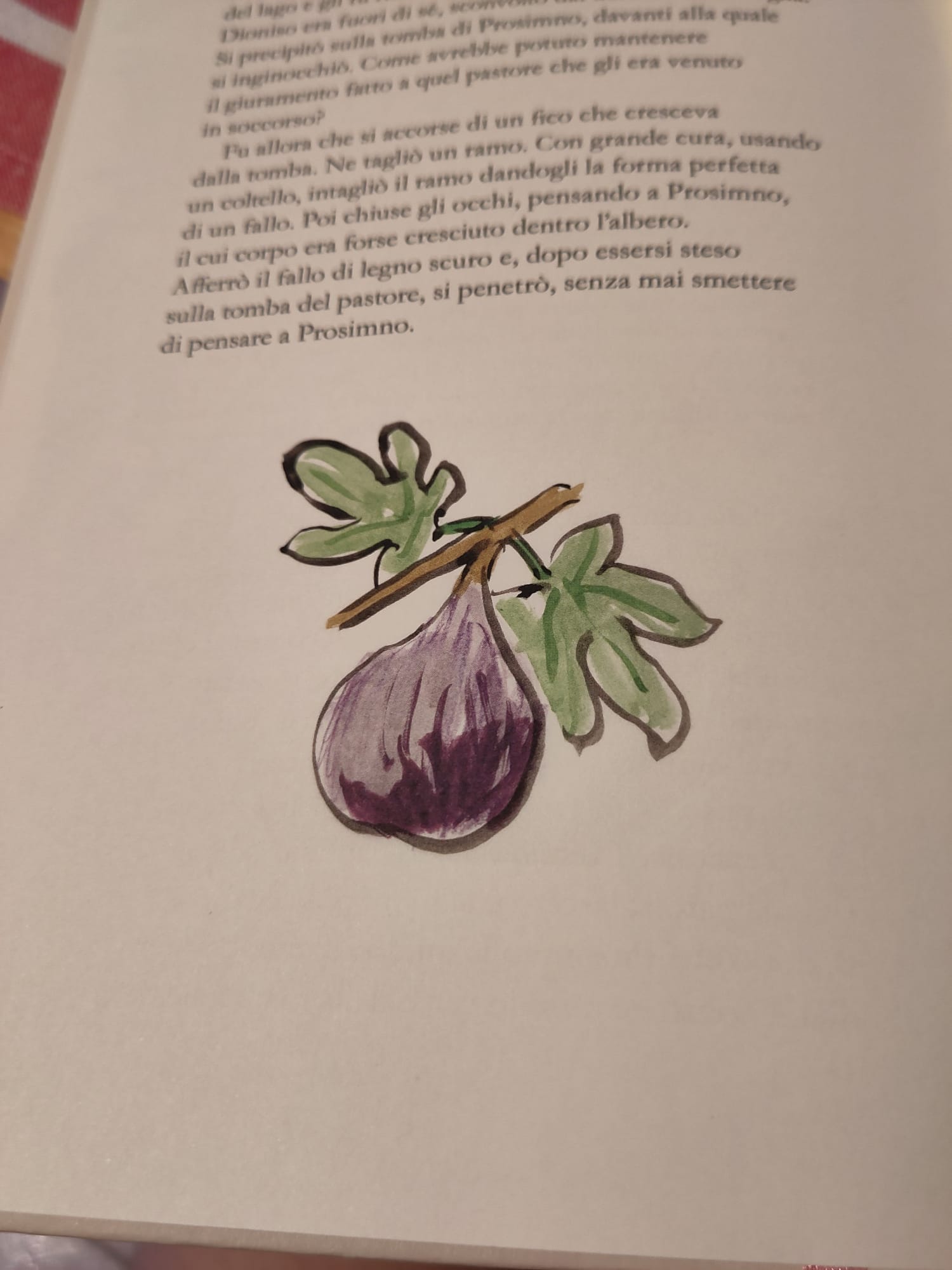
This myth might be an explanation of why the phallus and the fig are present in some accounts of the mystery cults dedicated to Dionysus, as a God of ritual ecstasy to reach divinity. Although we need to keep in mind that this myth as we know today, is a reconstruction made by Clement of Alexandria, an early christian writer, in his criticism on pagan Gods. So we don’t know how factual it really is to the original story, and how much of it were the author highlighting aspects that were against his christian worldview. Interesting enough, the fig is also part of the christian symbolic landscape, as some theorize that the fruit eaten by Eve was in fact a fig, a story of temptation and sexual awareness, that leads to the fall of human kind from the state of innocence.
Other than that, the fig has always been a symbol of fertility and fecundity in the warmth of the Mediterranean, being a sweet summer fruit in Italy.
May its sweetness lead us to the dionysiac realms of art and poetry.